Winn-Dixie #2314 / Harvey's Supermarket #1714
1066 Clearlake Road, Cocoa, FL - Clearlake Square Plaza
One of the biggest changes to the supermarket scene in Florida over the last year has been Southeastern Grocer's numerous conversions of Winn-Dixie stores into their new Fresco y Mas Hispanic supermarket format and their new Harvey's discount supermarket format. While Fresco y Mas has so far concentrated their presence to South Florida, Harvey's conversions have been seen in most other parts of the state, as well as outside of Florida with some BI-LO to Harvey's conversions in the Carolinas. I know many of you have expressed interest in seeing what these new Harvey's stores are like, so today I will present to you one of these stores, as well as explaining the background of Harvey's Supermarket:
The first Harvey's Supermarket opened in 1924 in Nashville, Georgia, however, the company can trace its roots back to 1910 when Iris Harvey began a makeshift grocery store in her living room as a means to supplement her family's income. Iris's living room supermarket became so successful, that her husband J.M. Harvey quit his job as a railroad foreman in order to grow his wife's successful grocery venture. The husband and wife duo moved their grocery store from their home to an actual storefront in 1924, marking Harvey's Supermarket's official debut. Mostly through acquisitions, Harvey's would grow themselves into a chain of 43 supermarkets in Southern Georgia as a family run operation. Harvey's stores at the time weren't anything fancy, but they did their job at providing basic groceries to the small towns they served. In 2003, the Harvey family sold their grocery stores to Delhaize, parent company of Food Lion. Delhaize would merge the newly acquired Harvey's stores into their Food Lion division, and some overlapping Food Lion stores were also converted into Harvey's stores. Food Lion would later assume all control of distribution to the Harvey's stores as well.

In 2013, Delhaize announced that Harvey's Supermarkets was to be sold to BI-LO Holdings (now Southeastern Grocers) as part of the package that also included Sweetbay Supermarkets and Reid's. This transaction would get Delhaize completely out of Florida, as well as significantly reduce their store count in Georgia. According to the original plan, BI-LO Holdings wanted to retire the Harvey's name and convert all of their stores to Winn-Dixie, however that ended up not happening. Harvey's was the only one of Delhaize's three brands to survive the sale to BI-LO Holdings, as all of the Sweetbay stores would later become Winn-Dixie and all of the Reid's stores would convert to BI-LO. Between the time the sale of Harvey's to BI-LO Holdings closed in late 2013 until 2016, Harvey's remained mostly as-is from its days under Delhaize's control, other than switching to BI-LO's distribution network. It wasn't until May 2016 when Southeastern Grocers unveiled their new direction for Harvey's at a prototype store in Jacksonville. Until this time, Harvey's was a traditional supermarket chain that focused on small town customers. Beginning in May 2016, Harvey's new direction was to be more "discount" oriented, with heavy emphasis on low price programs and the introduction of a rather large "$1 Zone", something I'll talk more about throughout this post. Including that first prototype, somewhere around 35 Winn-Dixie and BI-LO stores have been converted to the Harvey's banner since May 2016. I can't speak for the BI-LO stores, but many of the Winn-Dixies that were converted to Harvey's seem to have been locations that were never touched since the bankruptcy, or were previously Save Rite locations that converted back to Winn-Dixie. In addition to the new Harvey's format being rolled out to former Winn-Dixie and BI-LO stores, the original batch of Harvey's locations in Southern Georgia and the Florida Panhandle have also received the refresh and format change you'd find in one of the converted stores.
In the photo above you can see what the Cocoa Harvey's store looked like prior to its banner change on August 2, 2017. This store was part of a batch of 7 new Harvey's locations to open in Florida, which included the brand's debut in Central Florida. While I got a few exterior photos of this store prior to it being converted to Harvey's, I was never in here when this store was a Winn-Dixie. Prior to the Harvey's conversion, this store hadn't seen a remodel since the early 1990s, and had what I call the "Cheap Marketplace" interior. It wasn't the most appealing or visually exciting interior, and it looked extremely dated (not to mention bland). "Cheap Marketplace" was usually used as a way to freshen up some of Winn-Dixie's older stores during the peak of the Marketplace era, even if the stores were expanded or a fair amount of work was done on the building itself.

Other than some green paint and a new sign, the exterior is still the same as it looked in the Winn-Dixie days. This store opened as a Winn-Dixie in 1984, and has all the characteristics of an 80's built Winn-Dixie. When this store was converted into a Winn-Dixie Marketplace in the early 90's, it appears that an addition was added onto the building's right side (you can see this in the satellite imagery later in the post). Around the time this Winn-Dixie was converted into a rather blah example of a Marketplace store, another (much fancier) Winn-Dixie Marketplace opened two miles north of here in The Shoppes of Cocoa North. What's interesting about that store two miles north of here was that it was expanded into a deluxe Marketplace store in 1999, featuring larger fresh departments and a new liquor store (very similar to what is being advertised at the store in this flyer). Pretty fancy stuff for a 90's Winn-Dixie, right? However, if you clicked on those previous links to my photos of the Cocoa North Winn-Dixie, you'll see that fancy frills couldn't even save it. The Cocoa North Winn-Dixie closed in 2007 and has been abandoned ever since, while the rinky dinky old store just down the road continued to live on.

The Harvey's remodel was able to freshen this store up just a bit from the condition it was left in as a Winn-Dixie, but you'll see this place still feels very much like an old Winn-Dixie once we step inside.
From The Beef People as Winn-Dixie...
...to a promise of low prices as Harvey's, as we see how the signage on the right side of the building changed during the conversion. The actual points Harvey's is promising are listed on the left side of the building, which we'll see in a moment as we head toward the entryway. Speaking of the entryway, this side of the building has a ramp leading up to the right side of the vestibule. Usually most older Winn-Dixie stores I come across have the entrance on only one side of the vestibule, although I have seen some with doors on both sides. I wonder if this store had doors on this side as well prior to its Marketplace era remodel, considering the placement of that ramp like it is there.
Like I said before, the "new" Harvey's is very much pushing itself if a price conscious, discount-oriented grocery store. It's such an emphasis that they even have to put a giant sign about it on the front of the building!
With all of that background stuff out of the way, let's head inside and see what Harvey's is all about...
Stepping inside, we get a warm welcome from a giant photograph of the store's manager. We also get our first taste of this store's blend of old Winn-Dixie characteristics with its new decor, visible in the background (don't worry, we'll get a closer look at that in just a moment). When I came to take these photos, this store had officially been a Harvey's for only 6 days.
Since this Harvey's was still relatively "new" during my visit, they had a stack of these flyers explaining where products had been moved around too. The layout of the store's service departments was unchanged from the Winn-Dixie days, although some of the grocery selection was moved and consolidated in order to accommodate the $1 Zone.
The Grand Opening circular, which celebrated the opening of this new Harvey's in Cocoa in addition to the six other Harvey's stores that opened the same day as this one elsewhere in Florida.
In these new Harvey's stores (in addition to most other Winn-Dixies that have gotten the recent upgraded carts), they offer these odd mini-carts instead of the old two-tier style ones for smaller shopping trips. I commented on these carts in my post on the fancy new Winn-Dixie in Cocoa Beach, but I didn't get a close-up shot of one there. Since this Harvey's was my next stop after visiting that Winn-Dixie in Cocoa Beach, I figured I could make up for that here!
Cart storage takes up the remainder of the vestibule space. Behind the carts is a giant sign that briefly explains the history of Harvey's Supermarket, in addition to including some historic photos from Harvey's early stores. I thought this was a nice touch, especially as an addition to a new store in an area where Harvey's has never operated before.

In early 2016, Winn-Dixie introduced their "Down Down" ad campaign (which is still very much alive and well two years later), featuring the tagline "Prices down and staying down". (If you prefer to hear that tagline in song rather than just reading it on your computer's screen, click here for the catchy "Down Down" commercial). Instead of replicating "Prices down and staying down" at Harvey's, SEG modified the tagline to "Prices low and staying low" at Harvey's to demonstrate how Harvey's prices started out low and will remain that way (rather than suggesting at how prices were slashed "down" at Winn-Dixie). Otherwise, the style of the signage and its use throughout the store is very similar to how you would see the "Down Down" promotional signage at a Winn-Dixie.

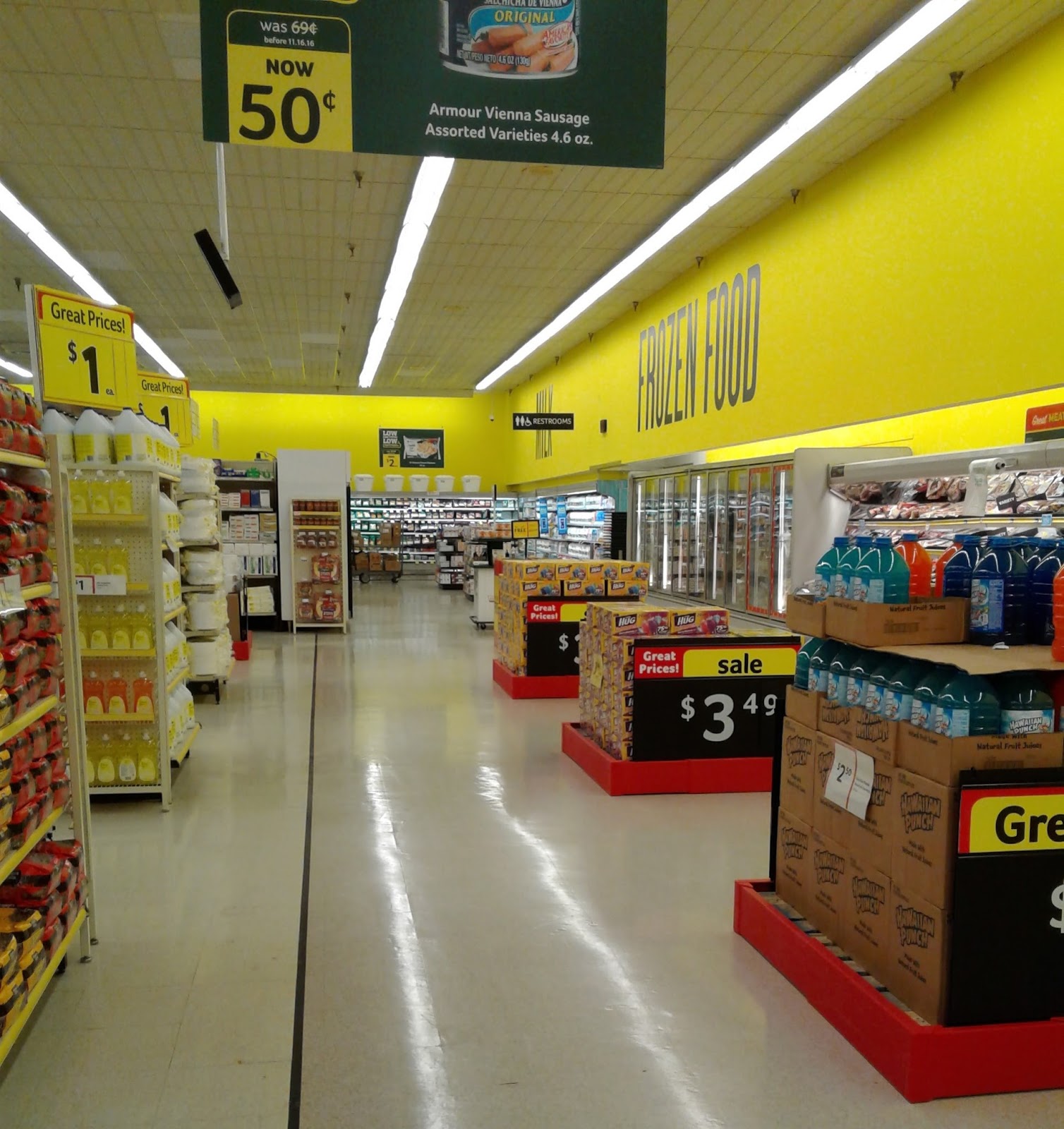
And here's our first good look at Harvey's decor, which is just a horrifically bright yellow version of the current "Down Down" decor. Fresco y Mas uses this exact same interior. I don't know why they chose to use the yellow version of this decor for Harvey's (or this bright shade of yellow to begin with), as I believe using Harvey's forest green color for the walls with white letters would have looked so much better. This yellow color is pretty powerful in person, which is somewhat demonstrated in the following photos. If SEG's goal was to brighten up these stores with this decor, they certainly achieved that goal! Here's a similar photo of this part of the store back in the Winn-Dixie days for comparison.

Other than the wall decor itself (which is officially described by SEG as a "vibrant color palate with fresh, contemporary interior signage), not much else was changed inside. The ceilings are original, the floor tile is still the Winn-Dixie Marketplace pattern, and even the coolers are original from Winn-Dixie (this is even more apparent over in the frozen foods section). Even with the modernized decor, the store itself still feels old since so much of what Winn-Dixie left untouched for over 25 years still wasn't touched during the remodel.

Upon first entering the store and going beyond the registers, you enter a small area with some promotional merchandise (an area which also serves as a small seasonal merchandise section). That can be seen in the prior two photos. Beyond that is the produce department, which is located in the front right corner of the store. This part of the store is housed in the Marketplace era addition from the early 90's, and includes the raised ceilings over produce which were typical of this era. The above photo looks from produce toward the deli and bakery in the back right corner of the store.

Even though Harvey's is aiming to be a "discount oriented" grocery store, Harvey's stores still feel more like a traditional supermarket compared to a more no-frills style operation like Save A Lot. Harvey's still carries a decent variety of items and national brands, uses traditional supermarket stocking techniques rather than placing product out in boxes, and still has a full service deli and meat counter.
Moving away from produce, this "grand aisle" gradually transitions into displays of sale items and prepackaged bakery goods.
And you can see just about the entirety of Harvey's bakery here. Harvey's bakery consists of prepackaged cakes and breads. I can't say for sure since I was never in here during the Winn-Dixie days, but I think the in-store bakery was eliminated during the Harvey's conversion. A bit later in this post we'll see where I believe Winn-Dixie's bakery was located, and I'll show you some evidence that seems to point to it being covered over. However, some older Winn-Dixie stores never had much of a bakery to begin with, so it could have gone either way here.

Looking back into the main aisle, we can see some of the tables of prepackaged baked goods offered here. This is actually a pretty good selection of baked goods, considering some actual Winn-Dixies that lack a full-service bakery don't even carry this many baked goods! I also saw a sign here that said you can still order custom cakes from this store. I'm not sure how that works though since the bakery was eliminated. My guess is that Harvey's can order the custom cakes from SEG's baked goods facility pre-decorated and frozen as needed.
Beyond the "bakery" is the full service deli counter, which was retained for the Harvey's conversion. The deli offerings are exactly as you would find at a typical Winn-Dixie, with the usual sliced meats, prepackaged salads, as well as rotisserie and fried chicken offerings.
Along the back wall, prepackaged deli meats follow the deli counter. Seafood and meats are located further down the wall in the distance.
Aisle 2 is a double wide aisle of drinks and sodas. In the Harvey's conversion, this store lost a few grocery aisles so some double-wide aisles could be added, as well as the $1 zone.
The entirety of the double-wide soda and drink aisle. Part of the lower ceiling from the produce department sticks out into this aisle as well.
A look across Harvey's front end, as seen from produce. There's certainly no shortage of yellow in this place. Honestly, the funky "modern" yellow decor clashed pretty bad with all of the other older traits that were left behind in this store, such as the old ceilings and the old floors. The new decor also has a bit of a sterile feel to it too, which is a trait that ins't quite as apparent in stores that got deluxe remodels to this decor package (like the Cocoa Beach Winn-Dixie I keep referencing).
One last peek into the produce department before heading into the $1 Zone...

And here it is, the much touted Harvey's $1 Zone. During these Harvey's conversions, the $1 Zone is one of the biggest things that SEG likes to push as part of the new discount oriented format. Three of the grocery aisles were eliminated in order to accommodate the new $1 Zone, which carries a variety of merchandise including groceries, office supplies, health and beauty products, cards and party supplies, and seasonal merchandise. The items in the $1 Zone include some name brands, but the majority of the items here are the same off-brands you'd find at Dollar Tree (in addition to other off-brands I've never heard of). I will say this though, both times I've been to this store (during my photo excursion as well as one other time I came by here after that), I ended up buying stuff from the $1 Zone when I really wasn't planning to buy anything here to begin with. There are some decent deals in this $1 Zone section, and it does a very good job at attracting impulse buys!

I have to say, I really liked this new $1 Zone. I don't think a dollar section will be SEG's magical cure to all of their problems, but's something to differentiate Harvey's from the others.
Finding ourselves at the back wall once again after leaving the $1 Zone, with Seafood now visible in the distance.
Yep - even the center support columns were painted yellow to match the rest of the store.
When Harvey's was first sold to BI-LO Holdings (now SEG), the Delhaize store brands were swapped out in favor of BI-LO's Southern Home brand. When Harvey's was reformatted and expanded further into Florida and into the Carolinas, Southern Home continued to be Harvey's store brand. Now with the conversion of the Winn-Dixie and Southern Home brands to the SE Grocers private label, SE Grocers will formally replace Southern Home at Harvey's.
In the pasta aisle was this mix of (older style) Southern Home packaging with the new SE Grocers private label. With Winn-Dixie carrying Winn-Dixie brand and Harvey's carrying Southern Home, at least there was some more to differentiate the two brands in Florida (even if the products were made in the same factories). With Winn-Dixie and Harvey's now carrying the same private label, it just makes Harvey's even more so a funky yellow Winn-Dixie with a dollar section.
Over by the pasta sauce, we have the entire SEG family represented. On the shelves we see Winn-Dixie brand (presumably left over from when this store was still branded as Winn-Dixie), Southern Home, and SE Grocers together for one last time.
Back to the front end again, as we continue further along through the grocery aisles...
The full service seafood counter survived the Harvey's remodel as well. Meats and Seafood are one of the departments where Harvey's has spared no expense, expanding the store's selection of meats and seafood during the conversion. Also, this store still has on staff butchers for custom cuts, something other "discount" grocers do not offer (another offering Harvey's likes to push).
Immediately next to the Seafood counter is the butcher, with cases of fresh and frozen meats extending beyond that.
Just beyond the meat department is frozen foods and dairy. The frozen foods department is primarily located in the last few aisles, although part of it wraps along the back wall.
Jumping back up front again for a look into the store's front left corner. If this store ever had a pharmacy (which I don't believe it did, since there was an Eckerd immediately next door to this place), it would have been located behind the magazine rack to the left side of the above photo. Just beyond that would have been the bakery.
But before we discuss the bakery, here are a few more grocery aisle shots as we progress toward frozen foods...
Yet another double-wide aisle created during the remodel, this time for the paper products.
While now a wall of wine, this is the spot where the bakery would have been located prior to the Harvey's remodel if this store did have a full service bakery prior. Looking through the window in the door, it looks like there are remnants from a service department back there. That makes me think there was a bakery here, just walled off for the Harvey's conversion.
Turning the corner from Beer and Wine, we find the rest of the Frozen Foods department. Many of the frozen foods are kept in these two rows of coffin coolers, which date back to the Marketplace remodel at the earliest (although painted white in an attempt to modernize them). The left side wall is home to dairy products.
This part of the store is another great example of the clash between old and new. For fun, here's an example of what the full blown version of a 90's Winn-Dixie frozen foods department looked like. Yes, Winn-Dixie loved their pastels!
Yet more "clash of the decades" can be seen in aisle 14, which runs between the two rows of coffin coolers.
Milk is located in the back left corner of the store. While I didn't get a photo of it, Harvey's also has the animal sound buttons the remodeled Winn-Dixie stores are getting. The button with the cow sound was tucked along side one of the milk coolers next to a stockroom door. I didn't see the button that makes the chicken sound here, although I could have missed it.
One final look across the back of the store before heading up front again...
This store was decently busy during my visit this particular weekday afternoon. They had 4 registers going with a little bit of a line at each.
The lowered ceiling above the registers is another classic Winn-Dixie Marketplace feature. They also must have been running a decent special on Little Debbie cakes here, as each register had a display of Little Debbie products in front of it!
This was the best I could do at getting a photo of the "Thank you for shopping at your Cocoa Harvey's" sign.
And last but not least as we wrap up our interior tour of Harvey's is the Customer Service desk. The desk itself looks like it's original to Winn-Dixie's Marketplace remodel, although I believe the other check stands were actually switched out for new ones during the Harvey's conversion.
For some reason I thought the placement of this little kiddie cart on a parking lot island made for a good photo. These little kiddie carts have been appearing in not only remodeled Winn-Dixie and Harvey's stores, but pretty much all other locations as their carts get swapped out for the new silver ones.
Eckerd Pharmacy #27 / Family Dollar #720
1072 Clearlake Road, Cocoa, FL - Clearlake Square Plaza
Attached to the left side of Harvey's is this Family Dollar store, which is a pretty obvious example of an 80's strip center Eckerd drug store. Eckerd opened in this location with the rest of the plaza in 1984, and remained here until building a new freestanding location across the street in 2000 (store #179). When Eckerd sold their Florida stores to CVS in 2004, CVS acquired the Eckerd across the street from here, but never opened a store in the building. CVS still owns the building across the street, which is currently empty (although it was occupied by an Aaron's Rent-to-Own store until 2016).
With that little side note out of the way, time to begin our look at some satellite imagery of this store, beginning with some Bird's Eye aerial images courtesy of Bing Maps:
Front
Right Side
Back
Left Side
And now some historic satellite imagery, courtesy of Google Earth:
Harvey's Supermarket #1714 - 2017
Winn-Dixie #2314 - 2009 - Here you can clearly see where the addition was done to the Winn-Dixie building during the Marketplace remodel.
Winn-Dixie #2314 - 2005
Winn-Dixie #2314 - 1994

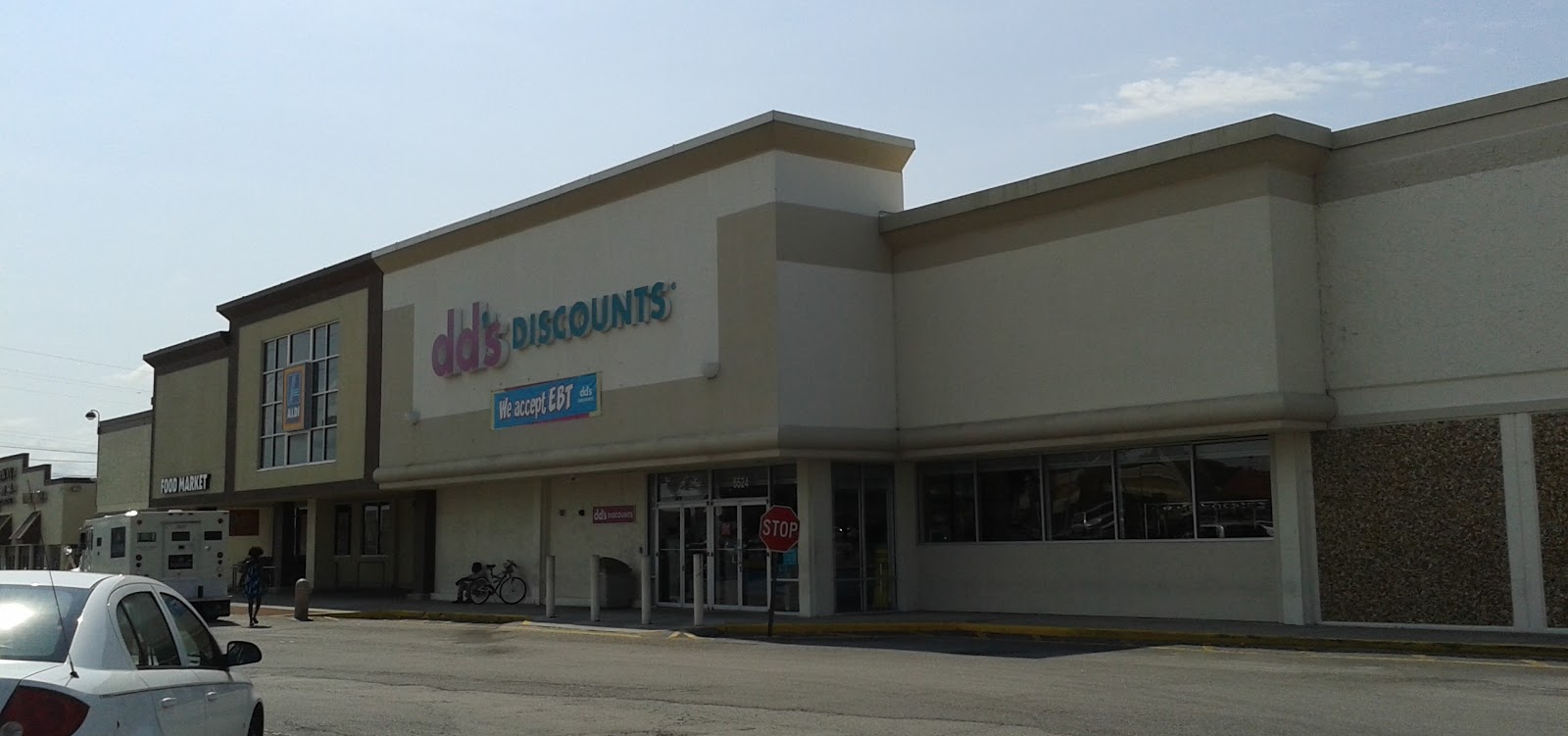
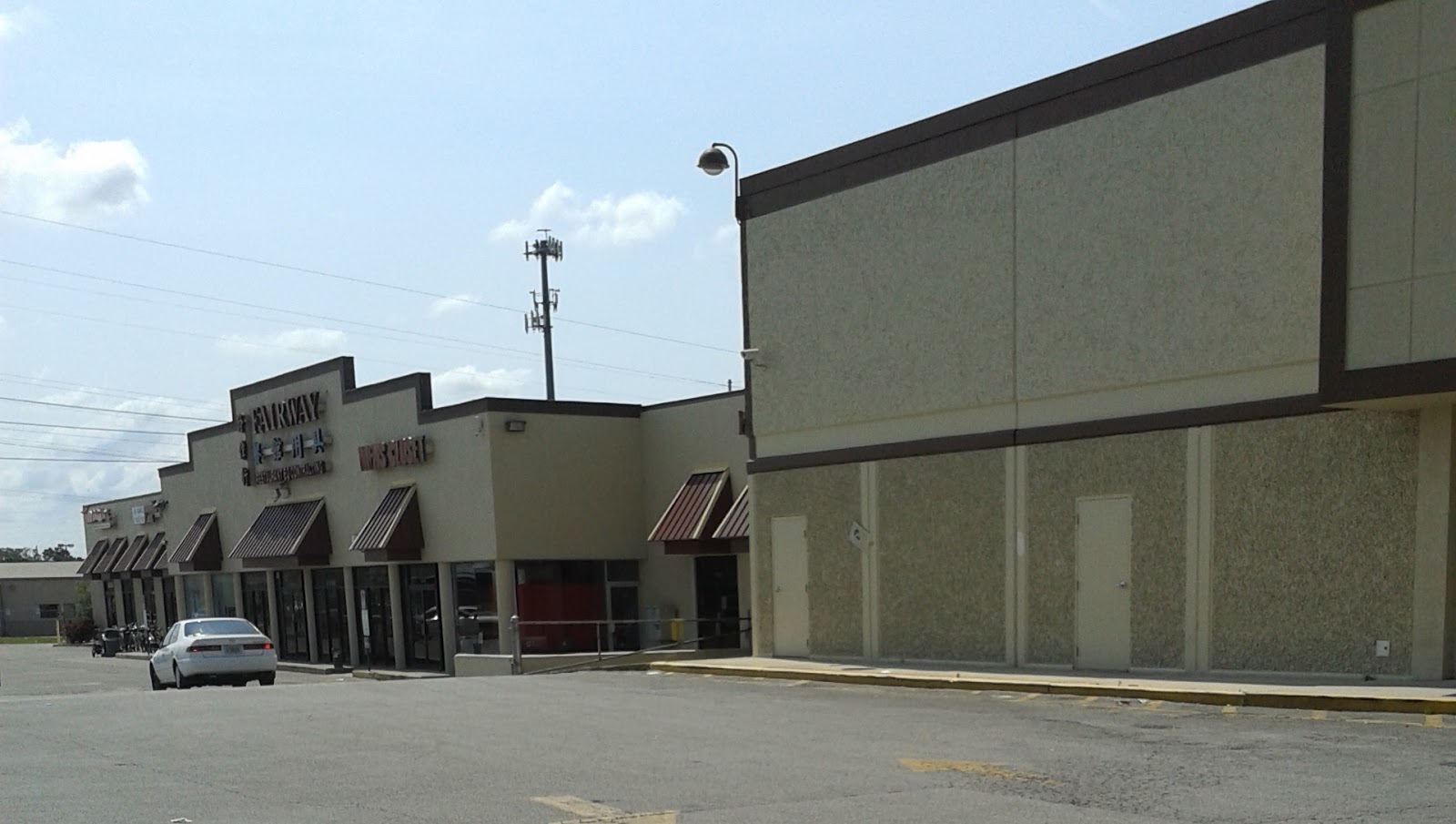
We'll conclude this post with a wide shot of the plaza, where we can see the former Eckerd and former Winn-Dixie together. When it comes to products offered, selection, and price, Harvey's actually has something going for it. However, the visual appeal of the store leaves little to be desired. The bright yellow decor is powerful on its own, but when paired with a 25 year old flooring pattern and a store that still feels dated overall, it's not the most appealing situation. This isn't just a problem with this store, as many of the other Winn-Dixie to Harvey's conversion stores I've seen photos of online contain a strange mashup of new decor with 25-30 year old remnants from the Winn-Dixie days (see here, here, and here for a few more examples). This particular Harvey's in downtown Jacksonville, though, looks pretty nice compared to some of the others, as that former Winn-Dixie had a deluxe version of the post-bankruptcy remodel prior to becoming Harvey's. According to claims from SEG, the Harvey's stores are supposedly doing well (interpret that as you may), so I wouldn't doubt it if more Winn-Dixies and BI-LOs will be announced to be converting to Harvey's. No new Harvey's stores have been announced for 2018 as of when this post was published. Is Harvey's the answer to SEG's problems? Probably not. Even though the concept isn't bad, converting weaker traditional stores to a discount format is typically a sign of desperation for a chain, much like when Winn-Dixie was converting stores over to Save Rite prior to their bankruptcy. Not only that, but the remodels are definitely budget remodels, and don't necessarily produce the most flattering results for store appearance and atmosphere, as we saw here in Cocoa. Even with the new wall decor, this place still comes off as dated to me. Anyway, now that we've taken a look at the new Harvey's what do you think of it? Desperation? The future? SEG trying to buy themselves time? If you have something to say, feel free to share it in the comments section below...
So that's all I have for this post. Until the next time,
The Albertsons Florida Blogger